
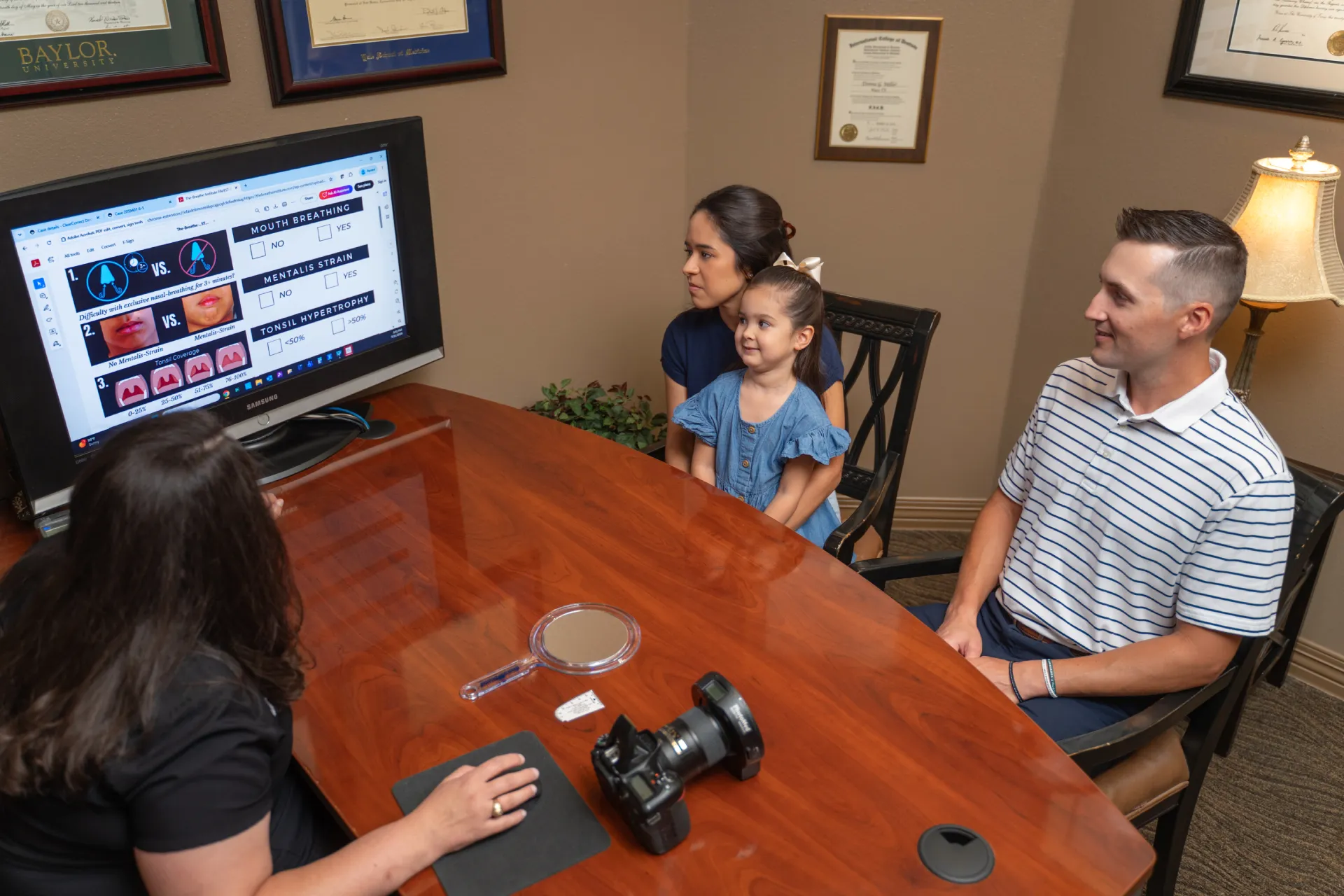
Why Might Myofunctional Therapy Be Necessary For Me or My Child?
If you or your child are struggling with breathing, eating, or speech issues, myofunctional therapy might be necessary — both before and after a frenectomy procedure is complete. This is a process that will help your tongue or your child’s tongue achieve proper function. Your myofunctional therapist will provide exercises designed to strengthen the tongue, and encourage proper swallowing, breathing, and more.

Meet your myofunctional therapist
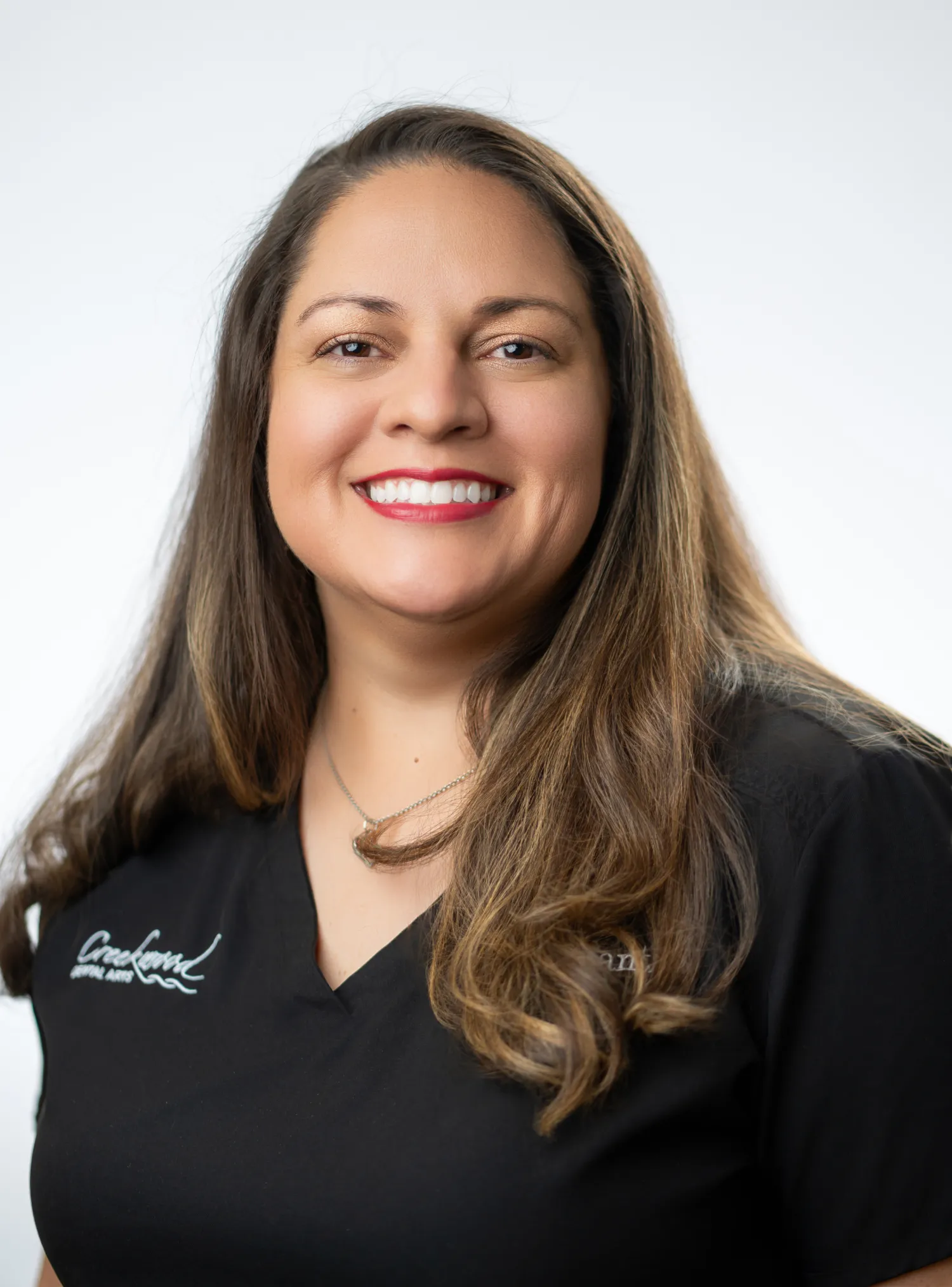
Samantha Brown, RDH, BBA, MSEd
Samantha Brown has always been a Central Texas girl, growing up in McGregor, Texas. Dentistry is a second career for her. She was an elementary school teacher for 7 years prior to becoming a dental hygienist and has worked in dentistry since 2019. She has been teaching in the Dental Hygiene department at Temple College since 2022. In 2008, she earned a Bachelor of Business Administration (BBA) degree in Management from Texas A&M University. In 2009, she earned a Master of Science in Education degree in Curriculum and Instruction from Baylor University. In 2019, she earned an Associate of Applied Science degree in Dental Hygiene from Temple College.
She is passionate about helping patients improve their oral and overall health and believes in staying current with new techniques and advancements in patient care. She treats her patients like she would treat her own family. When she is not at work, she enjoys traveling, Texas A&M football games, gardening, thrift shopping, and crafting.
The Benefits of Myofunctional Therapy
Allows For Proper Breathing & Swallowing
Myofunctional therapy treatment can alleviate snoring, and increase your ability to breathe and swallow food with ease.
Enhances Your Whole Health
The risk of issues such as heart disease, high blood pressure, and memory problems can all significantly decrease with a properly functioning airway system, thanks to myofunctional therapy.
Can Improve Facial Aesthetics
By learning to properly close your lips and teeth with your tongue resting against the top of your mouth, your appearance and posture will begin to change into optimal alignment.

Enhance breathing and overall health
Improve jaw development and facial growth
Enhance breathing and overall health
Correct Your Oral Habits with Myofunctional Therapy
Improper tongue posture, mouth breathing, and dysfunctional swallowing patterns can compromise your teeth alignment, jaw development, and overall oral health. Myofunctional therapy retrains these muscle habits, helping you achieve proper tongue position, nasal breathing, and healthy swallowing—which support straighter teeth, better facial development, and improved breathing.
The Myofunctional Therapy Treatment Process
Consultation

Consultation
First, you or your child will have a consultation with our myofunctional therapist. After taking a look at the tongue, mouth, and airway areas, the dentist will determine if you or your child may benefit from myofunctional therapy treatment.
Provide Exercises

Provide Exercises
Next, the myofunctional therapist will provide you or your child with a variety of exercises to train the tongue, lips, and mouth. These will help realign the facial features, and over time, the mouth will strengthen and adopt this new and improved condition.
Follow Up to Track Progress

Follow Up to Track Progress
To adopt new habits and see long-lasting results, it’s important to continue the exercises recommended by your myofunctional therapist. You’ll stop by our office to ensure that you or your child are keeping up with exercises and developing on track.
What makes us different
FAQs
Frequently Asked Questions
Check out these frequently asked questions, or call us to speak with our team.
Myofunctional therapy treats a wide range of oral and breathing issues stemming from improper muscle function, including tongue thrust, mouth breathing, open bite, improper swallowing patterns, and speech problems. It's also effective for addressing sleep-related issues like snoring and obstructive sleep apnea, as well as TMJ dysfunction and teeth misalignment caused by dysfunctional oral habits. By retraining these muscle patterns, myofunctional therapy can prevent or reduce the need for extensive orthodontics, support post-orthodontic stability, and improve overall oral health and quality of life.
Myofunctional therapy exercises are simple, gentle, and easy to perform—they typically involve targeted tongue movements, lip and cheek exercises, and breathing techniques designed to retrain muscle memory and establish proper oral posture. Most exercises take just a few minutes and are performed multiple times throughout the day, gradually building strength and awareness in the muscles that control swallowing, breathing, and tongue position. Your myofunctional therapist will guide you through a customized routine that progresses over time, with exercises becoming more natural until proper oral function becomes an automatic habit.
Common signs that you may benefit from myofunctional therapy include persistent mouth breathing, a forward tongue thrust, speech difficulties, open bite or teeth misalignment despite orthodontic treatment, and chronic snoring or sleep apnea symptoms. You might also notice frequent swallowing difficulties, a tendency to rest your tongue on your lower front teeth, poor head and neck posture, or recurring TMJ pain and tension. If you're experiencing any of these issues, especially in combination, a myofunctional assessment can help determine whether therapy would benefit your oral health and overall wellness.
