
Understanding the parts of a tooth implant helps you know what to expect before, during, and after treatment. A dental implant replaces a missing tooth by restoring the root and the visible tooth. Knowing the parts of a tooth implant makes it easier to follow care instructions, ask the right questions, and feel confident in your treatment choices.
What Is a Dental Implant?
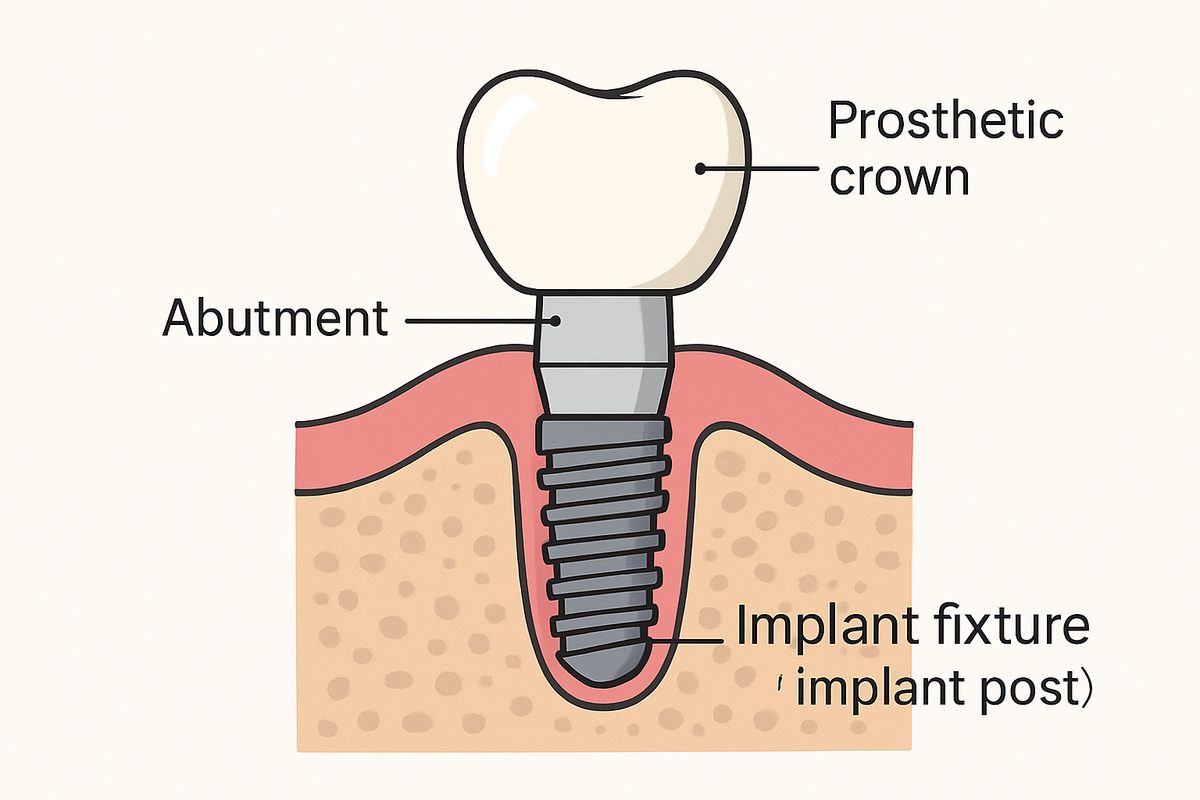
A dental implant is a tooth replacement system made of three main parts: the fixture (root), the connector (abutment), and the prosthetic tooth (crown, bridge, or denture). Together they restore function, look like a natural tooth, and help preserve jawbone health.
Main Parts Of A Tooth Implant
Implant fixture (implant post)
The fixture is the metal or ceramic post placed into the jawbone. It acts like a tooth root. Over weeks to months it fuses to bone in a process called osseointegration. A well-integrated fixture gives strong, lasting support for the rest of the restoration.
Abutment
The abutment is the connector between the fixture and the visible tooth. It can be straight or angled to match your bite. Custom abutments are made when needed to improve fit, appearance, or to correct alignment for a better final result.
Prosthetic crown, bridge, or denture
This is the visible part you see when you smile. A single crown replaces one tooth. An implant-supported bridge replaces several teeth, and overdentures attach to multiple implants for full-arch support. Crowns can be cemented or screwed onto the abutment.
Healing cap / cover screw
During healing, a temporary cap or cover screw protects the fixture and shapes the gum tissue. These short-term parts are removed before the final abutment and crown are placed.
Screws, attachments, and retention parts
Internal screws hold abutments and crowns in place. Locator attachments and other retention parts let dentures snap on and off. These parts affect how easy repairs and adjustments will be later.
Common Materials and What They Mean
Fixtures are usually titanium or zirconia. Titanium is strong and widely used; zirconia is metal-free and more tooth-colored. Crowns are often porcelain-fused-to-metal, all-ceramic, or zirconia. Porcelain looks natural; zirconia is very strong and resists staining.
How Each Part Affects Function, Comfort, and Care
A correct abutment fit and a well-shaped crown ensure even bite forces and comfortable chewing. Poor fit can lead to wear, looseness, or sore gums. Clean around the crown, abutment, and gumline daily with floss or interdental brushes. Regular dental checkups catch wear, loose screws, or gum issues early.
Signs an Implant Part Needs Attention
Watch for movement, pain, swelling, pus, a loose crown or screw, or new ringing or clicking when you chew. Call your dentist right away if you notice these signs.
What To Expect During Implant Treatment (Step-by-Step)
Your dentist will plan with digital imaging and 3D scans. The fixture is surgically placed, then allowed to heal with a healing cap. After osseointegration, the abutment is attached and the final crown or prosthesis is placed. Follow-up visits ensure proper fit and function.
Why Trust Your Implant Care With Creekwood Dental Arts
Creekwood Dental Arts in Waco, TX, offers experienced care led by Dr. Donna Miller. The practice uses digital imaging, 3D scanning, intraoral cameras, T-Scan occlusal analysis, and lasers for predictable results. They offer sedation options, financing plans, and a caring team focused on comfort.
Quick Takeaway and Next Steps
Knowing the parts of a tooth implant helps you understand function, care, and when to seek help. Call Creekwood Dental Arts or schedule a consultation to get personalized answers about implant options and next steps.