
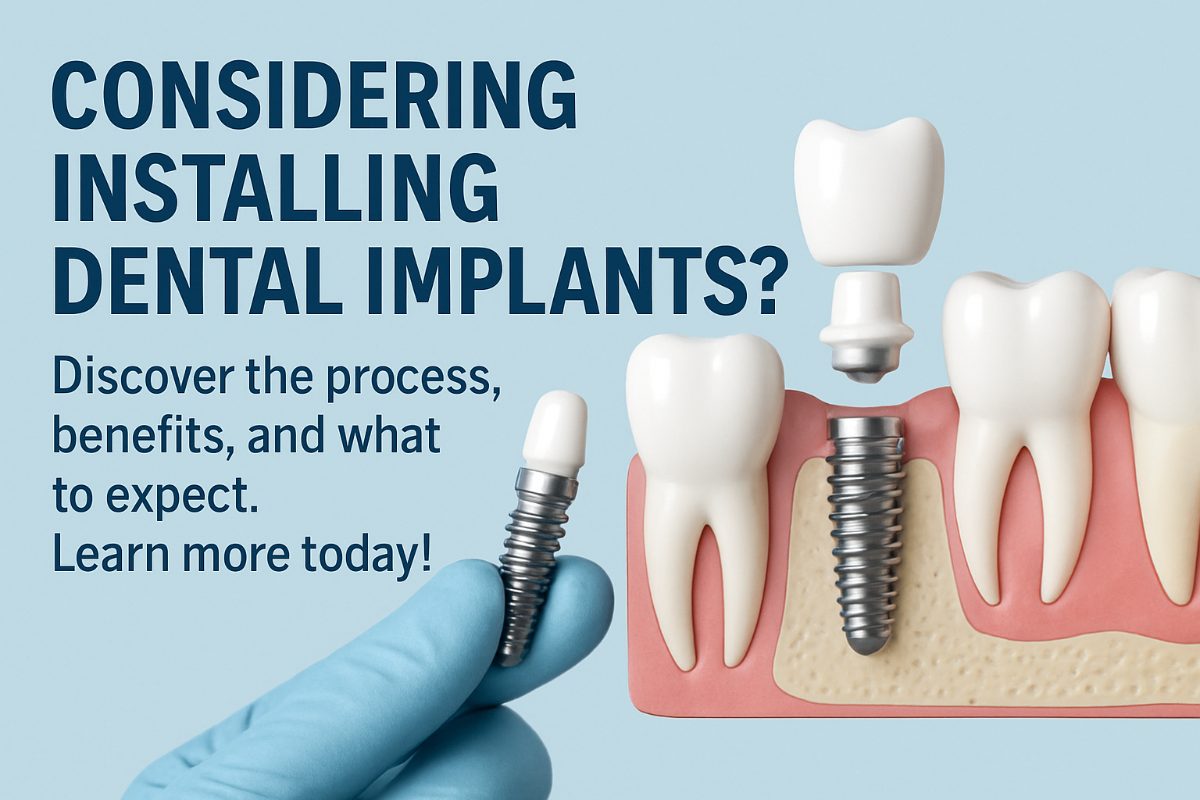
Installing dental implants is a surgical process where titanium posts are placed into the jaw to replace tooth roots, then topped with crowns, bridges, or dentures. Patients choose implants for a natural look, long-term stability, and to protect jawbone health. This post explains who makes a good candidate for installing dental implants, the types and steps involved, pain and risks, cost and insurance basics, questions to ask your dentist, and why Creekwood Dental Arts is a strong choice for installing dental implants in Waco, TX.
Who is a good candidate for installing dental implants
Oral health and bone requirements
Healthy gums and enough jawbone are essential for implant success. If bone has shrunk after tooth loss, a bone graft can rebuild volume so an implant will integrate. Your dentist will use digital X-rays and 3D scans to measure bone and plan placement that matches your anatomy.
Medical and lifestyle factors
Certain medical issues affect healing. Well-controlled diabetes, non-smokers, and patients not on medications that impair bone healing do better. Smoking, uncontrolled chronic disease, and some drugs can raise the risk of implant failure. Your dentist will review your medical history to assess risk and may coordinate with your physician.
Types of implants and restoration options
Single tooth implants
A single implant plus a crown replaces one missing tooth without altering adjacent teeth. This option preserves nearby tooth structure and looks and functions like a natural tooth.
Multiple implants and bridges
When two or more adjacent teeth are missing, implants can support individual crowns or an implant-supported bridge. Bridges on implants avoid relying on healthy teeth for support and can be more stable long-term.
Full-arch solutions (All‑on‑4 / implant overdentures)
Full-arch approaches like All‑on‑4 place several implants to support a fixed denture. Implant overdentures snap onto implants for improved retention. These solutions help patients who need a full upper or lower restoration regain chewing function quickly.
Step‑by‑step of installing dental implants
Consultation and planning
Treatment starts with a consultation and digital imaging. 3D scans and planning software let the dentist map implant positions for safe, predictable results and to create temporary restorations if needed.
Surgical placement and healing (osseointegration)
During placement, implants are inserted into the jaw under local anesthesia and often sedation. Healing (osseointegration) takes weeks to months while bone bonds to the implant. Follow-up visits monitor healing and gum health.
Final restoration and bite adjustment
After healing, your dentist attaches the final crown, bridge, or denture and adjusts your bite for comfort and function. Occlusal tools like T-Scan can fine-tune contacts to reduce wear and prevent complications.
Pain, risks, and how to reduce complications
Mild to moderate discomfort and swelling are common and managed with pain meds, ice, and rest. Risks include infection, nerve injury, and implant failure; these are minimized by good surgical technique, antibiotics when indicated, smoking cessation, and proper oral hygiene. Sedation and minimally invasive lasers can improve comfort and reduce recovery time.
Cost, insurance, and financing to consider when installing dental implants
Cost depends on the number of implants, need for grafting, type of restoration, lab fees, and provider experience. Many dental plans limit implant coverage, so expect out-of-pocket costs. Ask about in-office payment plans and third-party lenders like CareCredit or ProceedFinance to spread payments.
Questions to ask your dentist before installing dental implants
Ask about the dentist’s implant experience and success rates, which technologies are used for planning and placement, expected timeline, alternative treatments, and warranty or maintenance policies.
Why choose Creekwood Dental Arts for installing dental implants
Dr. Donna Miller leads Creekwood Dental Arts with decades of implant experience and advanced training. The practice uses digital imaging, 3D scanning, T-Scan occlusal analysis, and lasers to plan and deliver precise, comfortable care. Most insurances are accepted and multiple financing partners are available for patients considering installing dental implants in Waco, TX.
Next steps / Call to action
If you’re ready to learn whether you’re a candidate for installing dental implants, schedule a consultation to get a personalized plan and cost estimate. The team at Creekwood Dental Arts can answer your questions and help you find financing options that fit your needs.